Client Excellence with Tino-Gaetani and Carusi CPAs
The main key is keeping the
client experience at the core,
and having client delight
as a central theme.
And that means
thinking about the end user
and anything that we're doing.
The Karbon Excellence Awards recognize
the accounting firms that are
raising the bar for the industry.
On this podcast, we ask leaders
of the winning firms a series
of questions about how they're
taking their firm's culture, client
experience, technology, and leadership
to the next level.
I'm your host, Twyla Verhelst, and this is
the 2025 Karbon Excellence Awards podcast.
Tino-Gaetani and Carusi CPAs was
founded in 1994 as an accounting
firm that looks beyond the
numbers.
Since
then, they've been committed to a high
standard of service delivery for both
their clients and their community.
Now, they've been recognized as
the 2025 Karbon Excellence Award
Winner for Client Excellence.
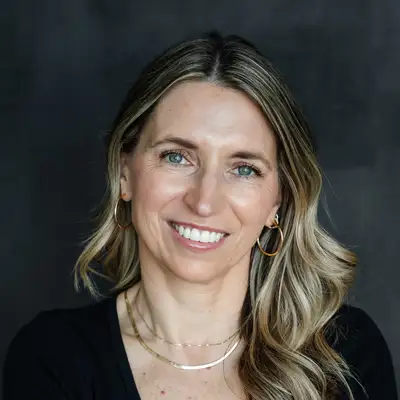
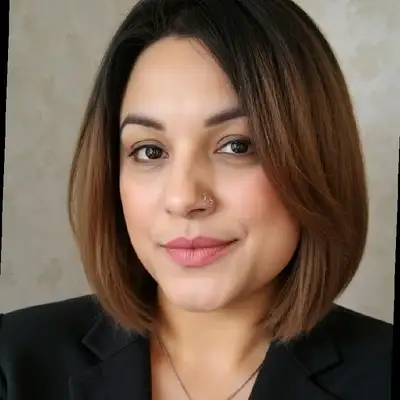
Today, I'm joined by Partner, Melissa
Gaetani, and Workflow Manager, Roslyn
Myall, to discover their strategy for
creating an exceptional client experience.
Welcome Melissa and Roslyn.
Thank you for having us.
Let's dive right into our topic
today and get into some of this
client delight that you share.
So I know that at Tino-Gaetani
and Carusi CPAs, you're guided by
this core theme of client delight.
But every client is different.
Plus, every industry is different.
The economy can change.
So with that in mind, how do you
consistently deliver client delight?
The main key is keeping
the client experience at the core,
and having client delight
as a central theme.
And that means
thinking about the end user
and anything that we're doing.
When I joined the firm four years
ago, they had just overhauled what
their workflow looked like and
kind of left room for the human
experience and the client experience.
So when we set those up, when
we think about our workflows,
how is it going for the client?
What is the client going
to experience in this step?
How does this stage affect the end user?
And a lot of times when we have
new clients join the firm, coming
from other firms, they feel
maybe like left out in the cold,
there wasn't communication.
Obviously, dealing with accounting
is not everybody's cup of tea, so
we
really try to make it a more
personal experience for them.
We want them to feel comfortable
reaching out to us for questions.
We want to be involved in
their big decisions in life.
We want them to know that
we're there for them.
Every client gets a Client Excellence
Coordinator and they have someone
assigned that they know they
can reach out to at any time.
Even since joining
Karbon,
as we work through all of our changes
and any, any upgrades or changes we're
making to our services, we just wanna
make sure that the end user experience
is taken into account first and foremost.
Yeah.
When Ros touches on the human experience
specifically, people often forget
that finances are super intimate.
So other than health, I would say
that finances are one of the most
important things in people's lives.
And money makes the world go
round, whether you wanna think
about that or not in that way.
And we've known about terminal illnesses
early on in a diagnosis, or we know
that somebody's leaving their spouse
before the spouse even knows that
they're being left kind of thing.
And so we get a lot of trust
from our clients like that.
And so we push constantly with our
team to remember the human element
of everything that we're doing
when we talk about client delight.
I love that.
I think that you hit the nail on the head
there, Melissa, with your talking about
how personal it is and, and how intimate
it is because I think as accountants we
tend to forget that this is more than
numbers to them and it can be highly
personal, so thanks for sharing that.
And love that you give everyone
this Client Experience Coordinator.
That's fantastic.
So going a little bit more into that then.
So when it comes to clients, you
believe in elevating the experience,
and that's been really obvious,
and delivering real value to them.
And you also have a particularly
high client retention rate.
So, tell us a bit more about that.
Like how do you consistently then
continue to raise that bar and
elevate the client experience?
What's your strategy for building
these lasting, sustainable
relationships with the clients?
And then, what role does
technology play in that?
So yeah, our client retention rate
is something we're really proud of.
It's 93%.
Noting that the involuntary
turnover rate is 2%.
So we are really proud of that.
And we also take into
consideration our client list.
Every year, we do a review to
make sure that we're working with
the people that we're comfortable
with and that we're providing the
best experience we can for them.
In the last few years, like I've
mentioned, we kind of reimagined
what workflow looks like.
And so, it's not just give
us your documents and we'll
give you things to sign.
We start off every file with
having a meeting with the client
to discuss what happened this year.
What are your concerns?
What are things you want us to take into
consideration as we work through this?
And then we try to keep them
updated throughout the file.
We make sure that if there's any
questions that we're asking, that
they're being thoroughly explained and
that they're comfortable with them.
And then when we're done their
work, we're meeting with them again.
We're discussing, you know, here's
your results, here's the planning
that we're gonna do for you.
We're talking any strategies
that need to be talked about.
And then making sure they're
comfortable with anything
before we just file their work.
So it is just incorporating them a
little bit more so they understand what's
happening, but also making it very clear
that we are in control of the experience.
So we have, you know, a team of Client
Excellence Coordinators that kind
of take them all the way through.
But then, also, our entire team
is focused on making sure that
the client delight's at the core.
So it's making sure that the client
is aware of what's going on and
not kind of leaving them out in a
cold when it comes to their work.
One of the things that whenever we get new
team members, they're always surprised by
the level of work that we do with clients.
And they're like, oh, does
this really make sense, both
from an economic standpoint and
just like an effort standpoint?
But we really believe that if we
put that effort in upfront, we
get to know these clients well,
we give them better service, they
pay us more, frankly, for that.
We have
them for a longer period of
time as a result of that.
And it's fun getting to walk a
entrepreneur's business life with them
from the beginning to their exit and
everything in between, and a place of
privilege to get that trust from them.
But we can't get there without the
cadence of meetings that we have
and the level of effort that we put
into understanding their situation.
Not just initially, but life
changes all of the time.
Yeah, and I think when you're
talking about the technology
that we use, obviously
Karbon's
a big part of that.
When we adopted
Karbon,
we thought about what that
end user experience would be.
And
as
Karbon's
evolved, we've been able to
evolve with them in using more
tools that help the client.
But we also use tools like, you know,
automated note taking that the clients
can get after so they don't have to
write things down or guess what was said.
And then as we kind of
launch more things like
Karbon for Clients, we're just making
sure that that experience just is
heightened every time and that we're,
we're choosing technology that works
for us, but also for the clients.
And then even taking it beyond what you've
just shared, inside of your nomination
form for the Karbon Excellence Award,
stated that you're not just providing
numbers, you're developing leaders.
And you've reimagined the virtual CFO
model through the Entrepreneur Coaching
Program where you offer education for
your clients to help make smarter,
more confident business decisions.
So tell us why would you invest in
this financial education for your
clients and do you think it actually
affects the way they value your
services or your level of expertise?
Yeah, everything we do
evolves around the client delight
factor that we talk about and
building walls around our clients to
make sure that they feel secure in
what we're doing and confident in
the experience they get with us.
So this Entrepreneur Coaching Program
kind of came around twofold.
So one,
I am an educator, so I teach at different
financial institutions, so I like that
component to the things that we do.
But also we were in a peer coaching
group and the four partners were in LA
for one of our trips to this coaching
group meeting, and we were being
pushed to reimagine a service that is
pretty boring, but should be helpful.
So we were sitting in a hot tub
at midnight trying to come up with
what would be helpful to clients.
And that's kind of how we started this
Entrepreneur Coaching Program idea.
It started with the notion that this
was really at the beginning of AI, at
the end of the whole CAS wave and cloud
accounting services and stuff, but the
beginning of AI and we're like, this whole
industry is going to move from transaction
to transformational pretty quick.
That all of these transactional based
things, if they haven't already been
automated, they will be automated already.
If we have access to that, it's
only a matter of time before
our clients have access to that.
And so we need to do something different
than just this basic transactional stuff.
And so we were trying to follow the idea
of what can be transformational to people.
And we started talking about the
entrepreneur's journey of, first they
like don't understand budgeting and
they don't understand even what they're
looking at with financial statements.
And then you get into cashflow management
and can I afford operational support?
And they don't necessarily understand
that, you know, 1 million, 3 million,
5 million, 10 million, these are
different platforms of revenue where
your business has to look different.
And so we came up with a whole list
of stuff that we couldn't write down
because we were in a hot tub, but
we committed to memory about things
that would be helpful to clients.
And that's kind of what started
the Entrepreneur Coaching Program.
We didn't know if people would
be willing to pay for it.
Turns out they were, because empowering
them to make their own business decisions
only made us more valuable to them
and made them better entrepreneurs.
Because once they got into the basics,
they were able to keep leveling up
throughout the entire experience.
So we keep trying to push
that we're not just trying to
solve
today's problems, we're trying to
equip you with how you can solve
tomorrow's problems, and that's been
really successful for us and the
entrepreneurs have really enjoyed it.
It's funny how the, the brilliant
ideas come to us at the oddest
places in the, at the oddest hour.
But sometimes, we have these ideas
that we think are good ideas and
then we don't see them through.
And so, you saw it through, you saw that
they valued it and would even pay for it.
And I think probably even in a world
of AI, that's still really valuable
because yes, we've all got AI at our
fingertips, but do we trust what's
being surfaced to us versus something
that's coming from yourselves.
Knowing that it's coming from
somebody who's financially savvy
and giving, giving good advice,
and educating from the right place.
So inside of your firm,
you have this mixture
of mentors and mentees.
So tell us how do you develop this culture
of this two-way mentorship, and what
are some of the advantages you've seen?
So like right from the
recruiting process, I'm,
I sit in pretty much every interview for
people, like one of the interviews for
the people that we hire and
I pretty much say every single time
that
in this field, regardless
of the position you're in,
the expectation would be that
you're constantly learning.
I am constantly learning new things
every day, whether that's client
oriented or how to lead a business
or how a process works or whatever.
And so I think setting the standard of,
we never stop learning and there's always
more to learn is the starting point to
this mentor and mentorship discussion.
I also write a letter to all the
new starts on their first day, and
I also make sure to tell them that
they're the most valuable people in
my organization for learning things
from, because they're coming in cold.
They're not entrenched in anything or
any decision making we've made before.
And so if something seems weird
or something seems great, they're
the best people to learn that from
because they have no previous bias.
And so we try and set the
culture early that no matter
what position you're coming in.
Everyone has something to learn
from you, and that's kind of the
foundation of the two-way mentorship.
We assign mentors and our mentors all have
really great things to teach people, but
I think if you ask any of them, they'll
be like, I've learned a lot from the
people that I've mentored, both and the
mistakes that I make in trying to deal
with them, but then also the insights
that they're able to give me because.
Once you move out of a position, you
quickly forget some of the nuances in it.
And so to be reminded about the day-to-day
of what's there I think is really helpful.
Our mentors, we try and challenge them
to stay curious about what's happening.
And we are constantly saying that
our firm is trying to challenge
the norms of this industry.
There's a lot of them.
I'm not in love with most of them, and
we, we try and push back on a lot of them,
whether that's things like the four day
work week or things like you get your,
you earn your stripes by working 70 hours
a week, which works out to like $4 an
hour and like all of that kind of stuff.
So there's a twofold
benefit to that mentorship.
And so we, we try and push it both ways.
I love the letter that you write
and the, you know, the message
that you give to your new hires.
I haven't heard of another firm owner
that does that, that really puts
new hire in this position of you are
highly valuable today, and here's why.
It's because you've got this fresh
set of eyes and you're coming into
a new, a new position, and a new
organization where soon you'll be one
of us and you won't have the fresh eyes.
You will be, you'll be biased, right?
And so I, I love that you do that
letter to them, Melissa, kudos to you.
I have, I have not heard
of anyone doing that.
So, uh, that's, that's a
really really great idea.
Let's a bit more now about community
and in your firm you aim to lead with
empathy, insight, and this focus on
delivering the outcomes that matter.
And that isn't just with your
clients or with your team, it's
into the broader community.
And for our audience listening, just
to kind of give you a, a real lay of
the land here in terms of what sort of
initiatives the team is involved with,
there's things like Start to Finish,
which is a registered charity aiming to
break the cycle of child poverty, as well
as the Oakville Community Foundation,
the Oakville Choir for Children and
Youth, the
Oakville
symphony.
So, Melissa, Ros, how does your
approach to client excellence shape
the way you volunteer your time and
your services in your community?
So I talked a little bit earlier
about the privilege that we get in
the seat that we sit in, because
we get a lot of trust from people.
But also, we develop a skillset
that is more intimidating
than most people think.
I try and tell our team early on that
just being able to read a financial
statement or understand the breadth
of a financial situation can be a
really intimidating thing for people,
and so financial literacy is important.
It's also something that gives people
their independence, to be able to
understand what they're looking at,
understand how money works, understand
budgeting, all of that kind of stuff.
And so throughout the last, I'm gonna say
five or six years, the idea of community
has changed.
Like when we talk about the Oakville
community, which is where our firm's
based, we have been and still are
very much involved in that community.
But for example, I work with a
lot of physicians there across
the country and there's that
whole community that's different.
You can talk about community in terms
of organizations or orientations
or all of that kind of stuff.
I think our approach to community has
been broadened but we definitely look into
where can our skillset help with people?
And so that skillset can be just having
money and giving a donation, but it
can also be going to retirement homes
and filing simple tax returns for
people that think this is like the most
intimidating thing and is really weighing
on them when for us, it takes like 10
minutes for something simple like that.
We look at the skills that we have and
the resources we have, and the partners
have a discussion every year on how do
we allocate that in a way that makes
sense with the goals for the year.
You set me up perfectly for the next
question and, and the reason being
is it's so clear as to why this year
we were so honored to be able to award you
with a Karbon Excellence Award and it was
so fun to have you in Napa and celebrate
with you, together with the Karbon team.
And so,
tell us, Melissa, what does it mean
to win a Karbon Excellence Award?
We've been really on a ride with
Karbon
from pretty early on in terms of
seeing where the product
was and understanding the
vision of where it's going.
What got us excited about working with
Karbon is that Karbon's
organization and TGC have a lot of
really similar values and a really
similar vision of where we're trying to
go and what we're trying to accomplish.
Although you guys are software
and we're accounting, I feel
like we're a peer group together.
And to be recognized by our peer
group for something that's really
dear to our hearts means a lot to me.
Well, I'll just say on behalf of Karbon,
thank you for locking arms with us
and giving us that feedback and, and
investing your time and your energy
and coming on this journey with us.
So,
I'll close off this episode with
the two of you by first is just
saying thank you so much for your
time, uh, and for spending time
with myself and our audience.
It's been so great to chat with you both.
Thank you.
Thanks.
For the audience today, you've
been listening to the 2025
Karbon Excellence Awards podcast.
Every episode we ask Karbon
Excellence Award winners a
series of questions on how they raise
the bar for the accounting profession.
For more advice and strategies on how
to grow your firm, visit the Karbon
Magazine at karbonhq.com/resources.
Bye for now.
Creators and Guests